Under CONPASS, an officer’s pay is tied to two key variables:
- Grade Level (GL): which reflects the officer’s rank and qualifications.
- Step: which represents years of service at a given grade level. Steps increase annually, resulting in incremental pay raises without necessarily achieving a promotion.
New recruits are placed on different grade levels depending on their educational qualifications:
- SSCE holders typically enter at Grade Level 03 – 05
- OND/NCE holders typically enter at Grade Level 06 – 07
- HND/B.Sc holders typically enter at Grade Level 07 – 08
- Master’s degree or Law degree holders may enter at Grade Level 09
The higher the grade level, the higher the monthly salary. Promotions move an officer from one grade level to the next, bringing significant pay increases alongside added responsibilities.
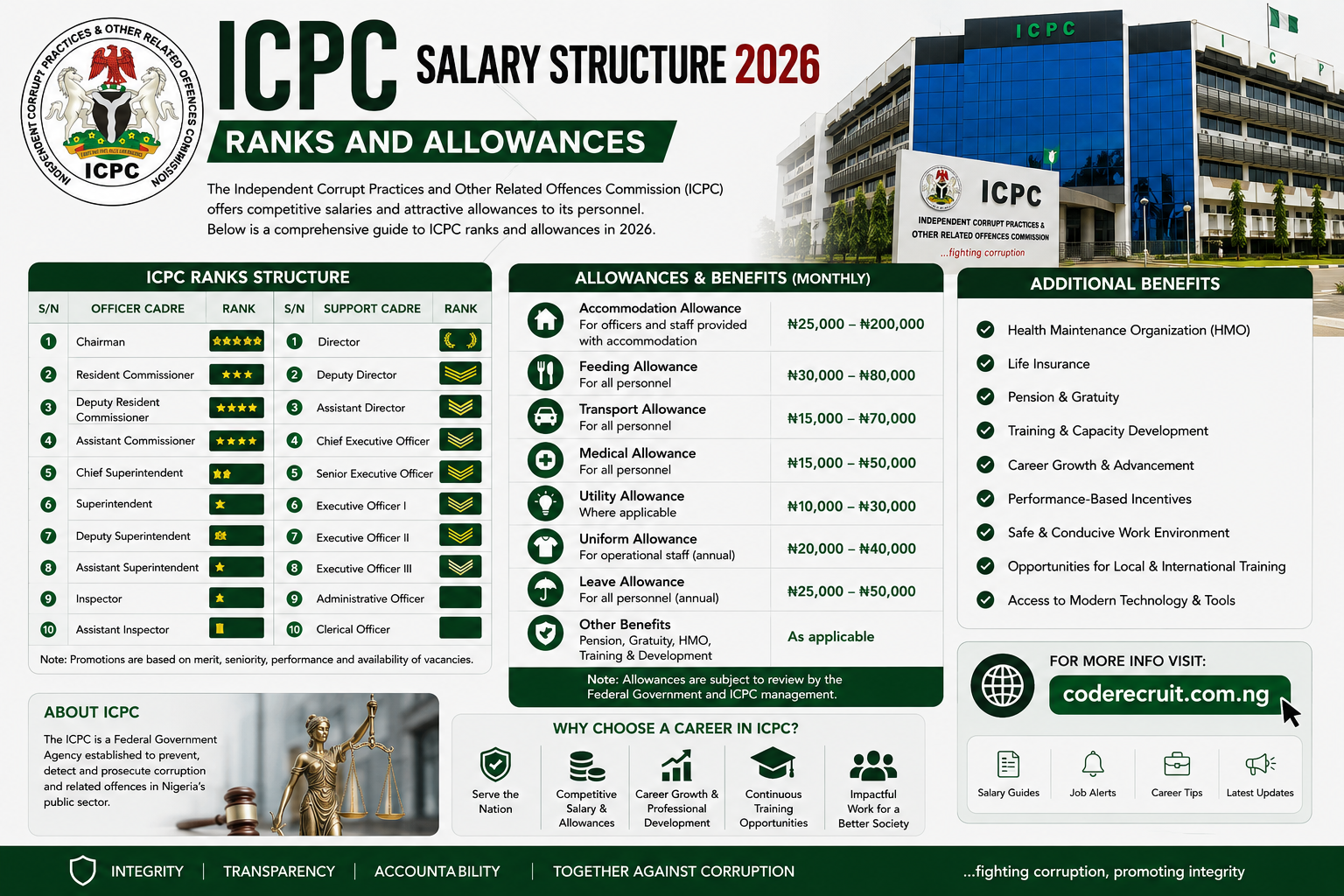
ICPC Cadres and Ranks in 2026
ICPC officers are organized into three main cadres, each corresponding to a specific educational qualification bracket. Within each cadre, there is a defined hierarchy of ranks from entry level to the most senior position in that bracket. Below is a complete breakdown:
1. Assistant Cadre (SSCE / WAEC Holders)
This cadre is the entry point for candidates who hold the West African Senior School Certificate (WASSCE/WAEC) or its equivalent. Officers in this cadre perform supporting functions including administrative tasks, record keeping, logistics, and assisting senior officers during investigations and operations.
The ranks in the Assistant Cadre include:
- ICPC Assistant III (IA III): Entry-level rank for fresh SSCE recruits
- ICPC Assistant II (IA II): After successful completion of initial training
- ICPC Assistant I (IA I): Takes on supervisory duties over junior assistants
- Senior ICPC Assistant II (SIA II): Experienced support officer
- Senior ICPC Assistant I (SIA I): The highest attainable rank in this cadre
2. Inspectorate Cadre (NCE / OND Holders)
This cadre is designated for officers who hold a National Certificate of Education (NCE) or Ordinary National Diploma (OND). Officers in this cadre take on more active roles, including conducting investigations, coordinating anti-corruption campaigns, supervising junior staff, and supporting legal and operational functions.
The ranks in the Inspectorate Cadre include:
- Assistant ICPC Officer (AIO): Entry-level rank for NCE/OND holders
- ICPC Officer II (IO II)
- ICPC Officer I (IO I)
- Senior ICPC Officer (SIO): Supervisory and operational duties; highest in this cadre
3. Superintendent Cadre (HND / B.Sc Holders and Above)
The Superintendent Cadre is the most prestigious and highest-earning cadre in the ICPC. It is reserved for officers who hold an HND, B.Sc., Master’s degree, or professional certification. This cadre handles leadership roles, strategic investigations, policy formulation, legal prosecution, and national-level anti-corruption programmes.
The ranks in the Superintendent Cadre include, from lowest to highest:
- Assistant Superintendent of ICPC II (ASI II)
- Assistant Superintendent of ICPC I (ASI I)
- Deputy Superintendent of ICPC (DSI)
- Superintendent of ICPC (SI)
- Chief Superintendent of ICPC (CSI)
- Assistant Controller of ICPC (ACI)
- Deputy Controller of ICPC (DCI)
- Controller of ICPC (CI)
- Assistant Controller-General (ACG)
- Deputy Controller-General (DCG)
- Controller-General of ICPC (CGI): The apex rank; head of the entire commission
In addition to these operational ranks, the ICPC also employs officers in the Director cadre at the management level, corresponding to Grade Level 14 through 17, which include roles such as Assistant Director, Deputy Director, and Director/Head of Department.
ICPC Salary Structure 2026 by Cadre
Below are the estimated monthly basic salaries (before allowances) for ICPC officers in each cadre, based on available 2026 data:
Assistant Cadre Salary (SSCE Holders)
| Rank | Estimated Monthly Salary (₦) |
|---|---|
| ICPC Assistant III (IA III) | ₦40,000 – ₦45,000 |
| ICPC Assistant II (IA II) | ₦46,000 – ₦50,000 |
| ICPC Assistant I (IA I) | ₦52,000 – ₦60,000 |
| Senior ICPC Assistant II (SIA II) | ₦65,000 – ₦70,000 |
| Senior ICPC Assistant I (SIA I) | ₦75,000 – ₦85,000 |
Inspectorate Cadre Salary (NCE / OND Holders)
| Rank | Estimated Monthly Salary (₦) |
|---|---|
| Assistant ICPC Officer (AIO) | ₦95,000 – ₦110,000 |
| ICPC Officer II (IO II) | ₦115,000 – ₦130,000 |
| ICPC Officer I (IO I) | ₦135,000 – ₦150,000 |
| Senior ICPC Officer (SIO) | ₦160,000 – ₦180,000 |
Superintendent Cadre Salary (HND / B.Sc Holders and Above)
| Rank | Estimated Monthly Salary (₦) |
|---|---|
| Assistant Superintendent of ICPC II (ASI II) | ₦170,000 – ₦190,000 |
| Assistant Superintendent of ICPC I (ASI I) | ₦200,000 – ₦220,000 |
| Deputy Superintendent of ICPC (DSI) | ₦230,000 – ₦250,000 |
| Superintendent of ICPC (SI) | ₦260,000 – ₦300,000 |
| Chief Superintendent of ICPC (CSI) | ₦310,000 – ₦350,000 |
| Assistant Controller of ICPC (ACI) | ₦360,000 – ₦400,000 |
| Deputy Controller of ICPC (DCI) | ₦410,000 – ₦450,000 |
| Controller of ICPC (CI) | ₦460,000 – ₦500,000 |
| Assistant Controller-General (ACG) | ₦550,000 – ₦650,000 |
| Deputy Controller-General (DCG) | ₦700,000 – ₦800,000 |
| Controller-General of ICPC (CGI) | ₦900,000 – ₦1,100,000 |
Note: The figures above represent basic monthly salary only and do not include allowances. With allowances factored in, total monthly take-home pay can be significantly higher.
ICPC Salary Structure 2026 by Grade Level
For those who prefer to understand the salary structure from the perspective of the federal government’s Grade Level system, here is the breakdown of ICPC monthly earnings by grade level:
| Grade Level | Position / Description | Estimated Monthly Salary (₦) | Estimated Allowances (₦) |
|---|---|---|---|
| GL 07 | HND Entry-Level | ₦74,000 – ₦78,000 | ₦15,000 – ₦30,000 |
| GL 08 | Graduate Entry (B.Sc / NYSC) | ₦94,000 – ₦95,000 | ₦20,000 – ₦40,000 |
| GL 09 | Master’s / Professional Certification | ₦120,000+ | ₦40,000 – ₦55,000 |
| GL 10 – 12 | Senior Officers / Analysts / Field Leaders | ₦150,000 – ₦180,000 | ₦40,000 – ₦70,000 |
| GL 13 – 15 | Principal Officers / Department Leads / Legal Analysts | ₦210,000 – ₦320,000 | ₦70,000 – ₦120,000 |
| GL 16 – 17 | Assistant Directors to Directors | ₦350,000 – ₦550,000+ | ₦120,000 – ₦250,000 |
Officers at Grade Level 08, Step 1 (fresh graduates) earn approximately ₦94,000 – ₦95,000 per month as basic salary. This figure increases with each annual step increment and jumps more substantially at promotion.
ICPC Allowances and Benefits in 2026
One of the most attractive aspects of working at the ICPC is the robust package of allowances and benefits that officers receive in addition to their basic monthly salary. These allowances are designed to reflect the sensitive, high-risk nature of anti-corruption work and to ensure that officers are not personally burdened by the financial demands of their duties.
Here is a detailed breakdown of the allowances ICPC officers receive in 2026:
1. Hazard / Operational Allowance
Amount: ₦20,000 – ₦50,000 per month
This is paid to field officers and those who handle sensitive or high-risk investigations. It compensates officers who may be exposed to personal danger in the course of their duties, including surveillance operations, arrests, and confrontations with corrupt officials.
2. Intelligence / Investigation Allowance
Amount: ₦30,000 – ₦80,000 per month
Paid specifically to undercover investigators and intelligence officers who carry out covert surveillance, data gathering, and sting operations. This is one of the more substantial allowances in the ICPC pay package.
3. Transport / Field Duty Allowance
Amount: ₦10,000 – ₦25,000 per month
Covers transportation costs incurred during local assignments, site visits, field operations, court appearances, and official travel within and outside the officer’s duty post.
4. Housing / Accommodation Allowance
Amount: ₦40,000 – ₦150,000+ per month
Officers who do not reside in government-provided quarters receive a monthly housing allowance. The amount varies based on grade level and the state of posting. Officers stationed in high-cost cities like Abuja, Lagos, and Port Harcourt typically receive higher accommodation allowances.
5. Medical and Utility Allowance
Amount: ₦7,500 – ₦15,000 per month
Provides support for routine healthcare services and basic utility expenses. Officers and their immediate dependents are often covered under the government’s healthcare scheme.
6. Uniform and Maintenance Allowance
ICPC officers receive a periodic allowance to cover the cost of purchasing, maintaining, and replacing their official uniforms and work-related equipment.
7. Meal Subsidy
A monthly meal subsidy is provided to officers, particularly those on active field duty or posted to remote locations. This supports officers who may not have easy access to affordable catering during extended working hours.
8. Training and Conference Allowance
Amount: Variable, depending on the programme
Officers who participate in mandatory training programmes, workshops, seminars, legal conferences, and retraining exercises receive dedicated allowances that cover their attendance, accommodation, and subsistence during the period.
9. Leave Allowance
ICPC officers are entitled to a leave allowance paid during their approved annual leave period. This is a percentage of the officer’s monthly basic salary and is meant to support personal and leisure activities during the leave.
10. Pension and Gratuity
All ICPC officers are enrolled in Nigeria’s Contributory Pension Scheme (CPS) managed by the Pension Commission (PENCOM). Both the officer and the Federal Government make monthly contributions toward a retirement savings account. Upon retirement, officers receive their accumulated pension savings and may be entitled to gratuity payments depending on their years of service.
Other Benefits
- Official Vehicle: Senior officers at managerial levels (Grade Level 14 and above) may be entitled to an official vehicle or vehicle loan.
- Official Quarters: High-ranking officers such as Controllers and Directors may be allocated government-owned residential accommodation.
- Group Life Insurance: Officers benefit from group life insurance coverage as part of their federal employment package.
ICPC Monthly Salary Summary Table 2026
The table below provides a quick summary of the ICPC salary structure for 2026, combining basic salary and allowance estimates across the main grade levels:
| ICPC Rank / Grade Level | Estimated Basic Monthly Salary (₦) | Estimated Allowances (₦) | Estimated Total Monthly Earnings (₦) |
|---|---|---|---|
| Entry-Level (GL 07 – 08) | ₦74,000 – ₦95,000 | ₦15,000 – ₦40,000 | ₦89,000 – ₦135,000 |
| Mid-Level (GL 09 – 12) | ₦120,000 – ₦180,000 | ₦40,000 – ₦70,000 | ₦160,000 – ₦250,000 |
| Senior Staff (GL 13 – 15) | ₦210,000 – ₦320,000 | ₦70,000 – ₦120,000 | ₦280,000 – ₦440,000 |
| Management (GL 16 – 17) | ₦350,000 – ₦550,000 | ₦120,000 – ₦250,000 | ₦470,000 – ₦800,000 |
| Controller-General of ICPC | ₦900,000 – ₦1,100,000 | Executive-level allowances | ₦1,200,000+ |
ICPC vs EFCC Salary Comparison 2026
A very common question among Nigerians exploring anti-corruption agency careers is: which agency pays more — ICPC or EFCC? The table below provides a direct side-by-side comparison:
| Criteria | ICPC | EFCC |
|---|---|---|
| Entry-Level Monthly Salary | ₦74,000 – ₦95,000 | ₦95,000 – ₦130,000 |
| Top-Level Monthly Salary | ₦900,000 – ₦1,100,000 | ₦700,000 – ₦1,000,000+ |
| Salary Framework | CONPASS | CONPASS |
| Hazard Allowance | Yes (₦20,000 – ₦50,000) | Yes (higher for field agents) |
| Investigation Allowance | Yes (₦30,000 – ₦80,000) | Yes (higher for financial cases) |
| Sector Focus | Public sector only | Public and private sectors |
| Career Growth Structure | Structured, slower pace | Structured, performance-driven |
| Work Nature | Balanced desk and field work | Heavily field and investigation-based |
While the EFCC offers slightly higher entry-level salaries, the ICPC provides a more balanced work environment, with a stronger emphasis on desk-based investigation, public enlightenment, and policy review. For professionals who prefer structured career progression without the extreme field pressures of financial crime investigation, the ICPC can be the better choice.
ICPC Promotion and Career Progression
Career advancement within the ICPC is structured and merit-based. Promotions are not automatic; they are earned based on the following criteria:
- Annual Performance Evaluations: Officers are assessed each year, and those with outstanding performance ratings are recommended for promotion.
- Years of Service: In most cases, officers must serve a minimum number of years at a given grade level before being eligible for promotion consideration.
- Professional Development: Officers who acquire additional academic qualifications (e.g., a postgraduate degree) or professional certifications relevant to their work can accelerate their promotion timelines.
- Promotion Examinations: Certain cadre transitions may require the successful completion of internal promotion examinations conducted by the ICPC.
- Availability of Vacancies: Promotions are also subject to the availability of positions at the next grade level within the commission’s establishment.
The typical career progression pathway for an ICPC officer is as follows:
- SSCE holders: IA III → IA II → IA I → SIA II → SIA I
- NCE/OND holders: AIO → IO II → IO I → SIO
- B.Sc/HND holders: ASI II → ASI I → DSI → SI → CSI → ACI → DCI → CI → ACG → DCG → Controller-General (CGI)
Each promotion brings a higher grade level, increased basic salary, richer allowances, and expanded responsibilities. Officers at senior levels also gain access to official vehicles, residential quarters, and increased pension contributions.
Qualifications Needed to Join ICPC in 2026
To be eligible for recruitment into the ICPC, candidates are generally expected to meet the following requirements:
Educational Qualifications
- Minimum: West African Senior School Certificate (WAEC/NECO) with credits in at least five subjects including English Language and Mathematics
- Mid-level entry: Ordinary National Diploma (OND) or National Certificate of Education (NCE) from a recognized institution
- Standard entry: Higher National Diploma (HND) or Bachelor of Science (B.Sc.) from an accredited Nigerian or foreign university
- Specialized roles: Master’s degree or Law degree (LL.B) for positions in intelligence, legal prosecution, forensics, and finance
Other Requirements
- NYSC Discharge Certificate or Exemption Letter (for degree holders)
- Age: Generally between 18 and 35 years for entry-level positions
- Must be a Nigerian citizen of good character with no criminal record
- Physical fitness and readiness to undergo paramilitary training
- Medical fitness certificate from a government-recognized hospital
Preferred Disciplines
Candidates with degrees or certifications in the following fields have a higher chance of selection into the ICPC:
- Law (LL.B)
- Accounting and Finance
- Criminology and Security Studies
- Public Administration
- Computer Science and Information Technology
- Economics
- Sociology
- Statistics
- Mass Communication
Conclusion
The ICPC salary structure for 2026 presents one of the most clearly defined and financially rewarding career pathways in Nigeria’s federal paramilitary service. From entry-level SSCE recruits earning between ₦40,000 and ₦85,000 per month, to HND and degree holders in the Superintendent Cadre earning upwards of ₦170,000 at entry and well over ₦1 million at the pinnacle of the career ladder — the ICPC offers competitive remuneration that is further enriched by a generous package of hazard allowances, accommodation allowances, intelligence allowances, pension contributions, and other benefits.
Beyond the financial rewards, a career at the ICPC comes with a deep sense of national purpose. Officers of the commission stand at the forefront of Nigeria’s fight against public sector corruption — investigating officials who abuse power, educating citizens about ethical conduct, and systematically dismantling the institutional loopholes that enable corruption to thrive.
If you are searching for a stable, well-paying, and nationally impactful career in the Nigerian paramilitary or civil service, the ICPC is a worthy and prestigious choice. Keep an eye on the official ICPC website and reputable Nigerian recruitment portals for information on upcoming recruitment exercises.
Did you find this guide helpful? Share it with friends and family who are interested in building a career with the ICPC. Also, feel free to drop your questions in the comments section below — we are always ready to help.